How to Start Quiet Time When Your 3 Year Old Stops Napping
The nap is gone, or it's on its way out. Your child still has a whole afternoon to get through, and so do you. Quiet time is a simple way to keep a break in the day without needing sleep.
This guide covers what quiet time is, how to set it up, a first-week plan, and what to try when your child keeps coming out of the room.
What is quiet time (and how is it different from a nap)?
Quiet time is a short, regular part of the day when your child plays alone in a set spot with a few quiet things, whether or not they sleep. A nap is for sleeping. Quiet time is for a break from the day's activity, whether or not your child sleeps.
If you're unsure whether your child still needs sleep during the day, ask your pediatrician.
How do I start quiet time with a 3 year old?
Choose a time, choose a spot, fill a box with a few things, and explain it once in plain words. Here are the steps:
- Pick the time. Right after lunch is a natural place, since it's where the nap used to be.
- Pick the spot. A blanket, a small table or their room. Somewhere you can hear them and they can find you.
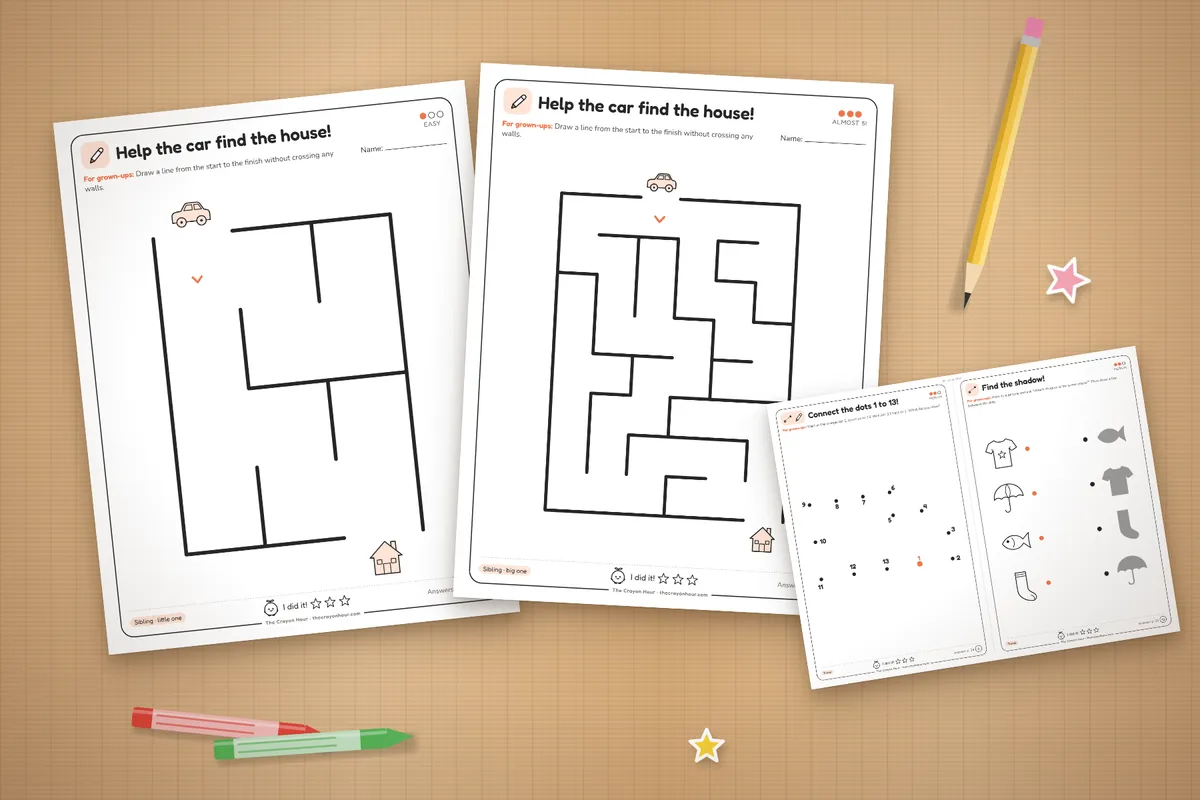
- Fill a quiet time box. A folder with a few printed pages, crayons, a picture book and one or two hands-on things such as large stickers or a chunky puzzle. It only comes out at quiet time.
- Tell them once, simply. "After lunch we have quiet time. You get the box. I'll be right here."
- Make the end easy to see. A visual timer, or "when the music stops."
Start small. Begin with a short stretch and a few things in the box, then add a little more every few days. There's no need to rush to a long quiet time.
What could the first week look like?
Try keeping it short and the same each day. One way to try the first week (adjust it to your child):
- Days 1–2: Do quiet time right where you are, with the box and a page or two. Sit nearby and show the first page once.
- Days 3–4: Same time and spot, a few more pages. Stay in the room but busy with your own thing.
- Days 5–7: Move a little farther away, still within earshot. Mention at the end what they did: "You finished the maze."
Some days will go better than others, and that's normal. If a day falls apart, go back to the shorter version the next day.
What should be in the quiet time box?
Pick things your child can start without you. For three-year-olds, that means one clear task, big shapes and simple pictures.
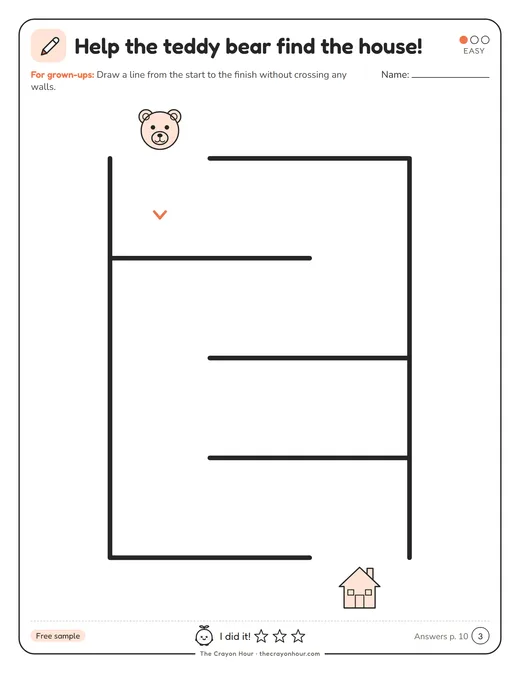
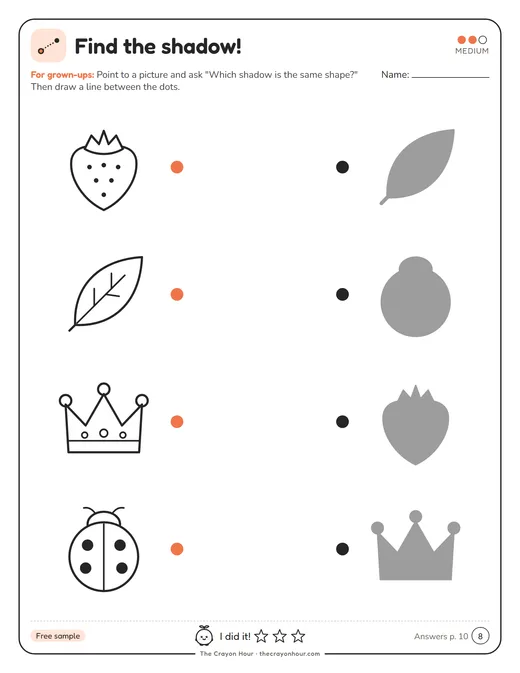
- 3 to 5 printed pages. Mazes, tracing lines, connect the dots 1 to 10, find and count, find the shadow, color by the key. Each page should show the task with a picture, so your child doesn't have to wait for an explanation.
- A few crayons. Chunky ones are easier to hold.
- A book or two they already know.
- A hands-on thing: large stickers, a chunky puzzle, a few blocks on a tray.
Skip anything small enough to fit in a mouth. If you use scissors, please stay close while your child cuts.
Print just a few pages at a time, and keep the rest for later so the box stays interesting. Rotate what's inside every week or so.
What if my 3 year old keeps coming out of quiet time?
Stay calm, walk them back, and keep the routine the same. It happens. Things to try:
- Walk them back, briefly. "Quiet time isn't over yet. Your box is here." Say it the same way each time.
- Check the box. If they went through it quickly, swap in two new pages.
- Check the time. Is it too long? Shorten it and build back up.
- Make the end visible. A timer or a song can help show when they're done, without asking you.
- Offer a choice. "Maze first, or stickers first?"
If you have concerns about your child's sleep, talk to your pediatrician.
What do I do if my child falls asleep at quiet time?
If your child falls asleep during quiet time, nothing about the box needs to change. Questions about naps and bedtime are for your pediatrician.
Try pages made for quiet time
If you'd like to see whether your child likes this kind of page, we'll email you 7 free pages from The Crayon Hour for ages 3–5:
- a maze
- color by the key
- trace a letter
- find and count
- connect the dots, 1 to 10
- find the shadow
- cut and glue
One page uses scissors and a glue stick: please stay close while your child cuts. Every page shows the task with a picture, and there's one short line at the top for grown-ups. Print 3 to 5 for one sitting, slip them in a folder with crayons, show the first page once, and step back.
If you want a bigger supply, the full Quiet Time packs from The Crayon Hour have 48 to 240+ pages, from $17, with a 30-day money-back guarantee.
For 12 more ideas for the box, see 12 Quiet Time Activities for 3 Year Olds.
Frequently asked questions
How do I start quiet time with a 3 year old?
Choose a time and spot, fill a box with a few pages and hands-on things, and explain it once in plain words. Start with a short stretch and add a little at a time.
How long should quiet time be?
There's no single right length. Start short and build slowly, based on what your child can do comfortably.
What if my child won't stay in the room?
Walk them back calmly, use the same words each time, and check whether the box has enough new things. Shorten it for a few days if needed.
Can quiet time replace a nap?
Quiet time and naps are different things. Whether your child still needs a daytime nap is a question for your pediatrician.
Should I use a timer?
A visual timer or a song can show the end without asking you. Choose whichever your child understands.
Do I need a color printer for the pages?
No. Pages made for black and white work on any home printer with regular paper.